1. What is programming?
You write instructions for the computer, and it executes them step by step. Computers do not understand natural language, so we use programming languages to describe exactly what we want.
print("Hello World!")
2. Variables
A variable is a place in memory where you store data so you can use it later. Instead of repeating values, you store them once and refer to them by name.
name = "Tarek"
age = 25
print(f"Hello {name}, you are {age} years old")
Tip: Use clear names that describe the data, e.g., user_age instead of x.
3. Conditions (if)
Conditions allow your program to make decisions. If a condition is true, do one thing; otherwise, do something else.
age = 20
if age >= 18:
    print("Access granted ✅")
else:
    print("Access denied ❌")
4. Loops
Loops repeat the same task a number of times or until a condition is met. Instead of writing 100 lines, you write two.
for i in range(1, 11):
    print(f"Number: {i}")
5. Functions
Functions are blocks of code you write once and reuse whenever you need them. This saves time and keeps code organized.
def add(a, b):
    return a + b

result = add(5, 3)
print(result)  # 8
6. Data Types
Every language has basic data types you should understand:
- Text (String) — any text in quotes
- Number (Integer/Float) — whole or decimal numbers
- Boolean — True or False
- List/Array — an ordered collection of items
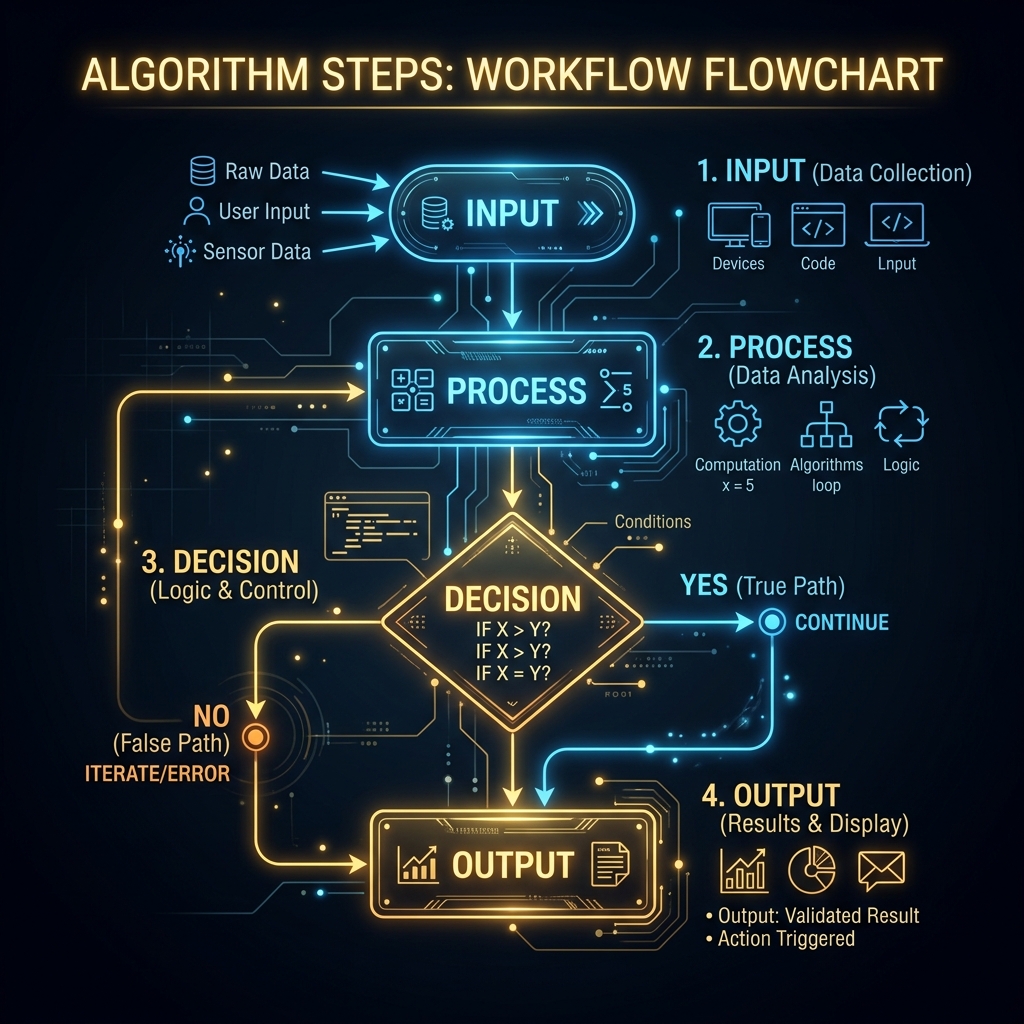
7. Algorithms
An algorithm is a step-by-step plan to solve a problem. Every program relies on algorithms, simple or complex.
- Sorting numbers from smallest to largest
- Searching for a record in a database
- Finding the shortest path between two points
8. What should you use in practice?
If you want to work on the web, these are the core tools:
- HTML — page structure (the skeleton)
- CSS — styling and layout (the skin)
- JavaScript — behavior and interaction (the soul)
- Laravel / Node.js — logic + database (the brain)
9. The big picture
Every program follows the same idea: input, processing, output.
# Input
num1 = int(input('Enter the first number: '))
num2 = int(input('Enter the second number: '))

# Processing
result = num1 + num2

# Output
print(f'Result = {result}')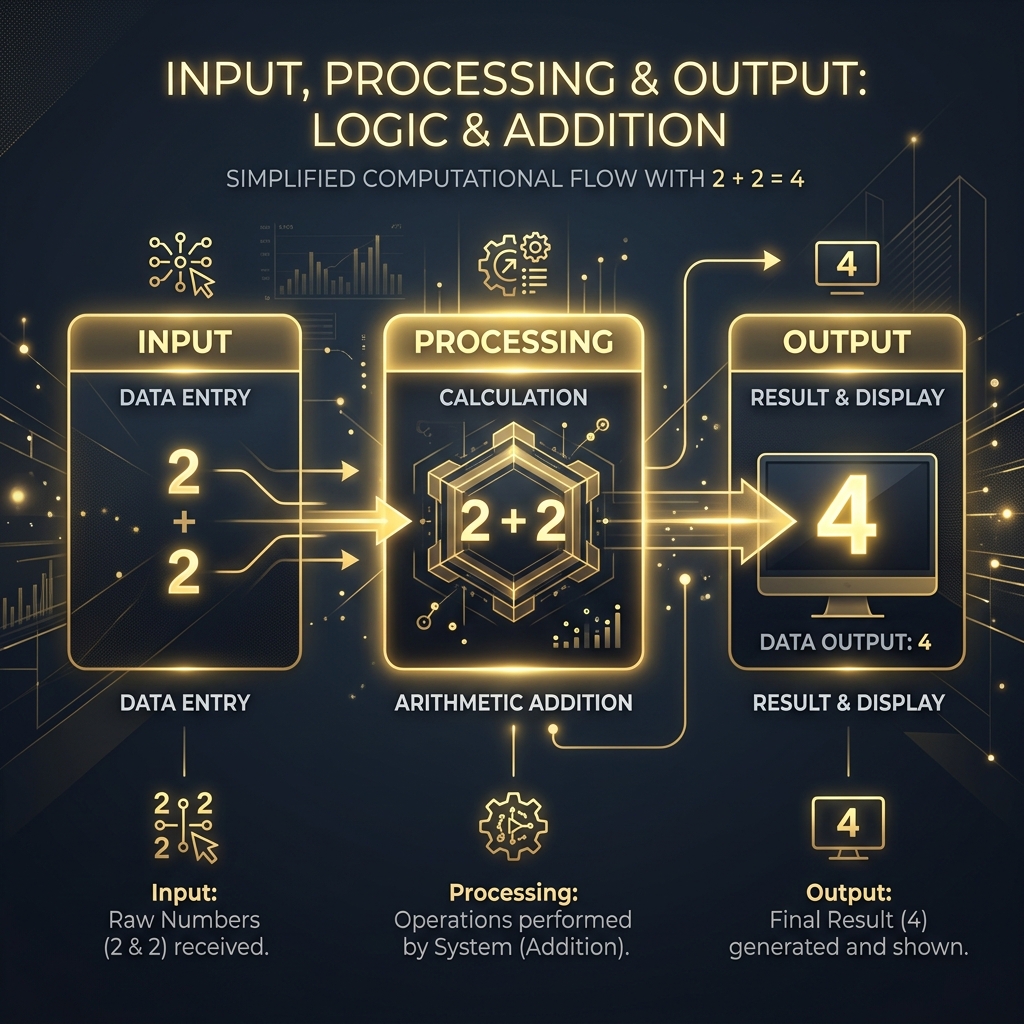
✅ Summary
Programming comes down to four core ideas:
- Store data (variables)
- Make decisions (if/else)
- Repeat actions (loops)
- Organize code (functions)
If you understand and practice these four, you are ready for the next step. 🚀